
Shahid Beheshti University of Medical Sciences Hosts Polish Delegation

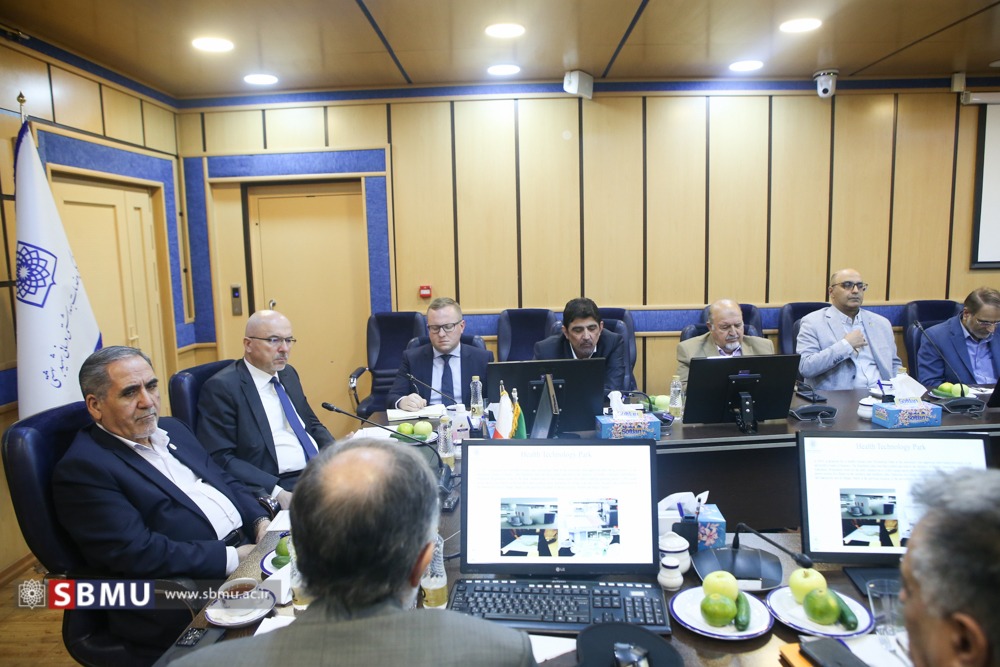
Shahid Beheshti University of Medical Sciences (SBMU) hosted the Polish Ambassador and his delegation on October 11, 2025.
Key attendees included Dr. Qaidari, Chancellor of Shahid Beheshti University of Medical Sciences; Mr. Marcin Wilczek, Polish Ambassador to Iran; Maciej Drągowski, Second Secretary for Political Affairs and Vice Consul at the Polish Embassy in Iran; and a group of university officials.
The meeting commenced with a welcome from Dr. Qaidari, Shahid Beheshti University of Medical Sciences Chancellor, to the delegation. He expressed his strong hope and readiness to expand cooperation beyond academic and research endeavors into clinical medicine, hygiene, and preventive health, asserting that a strong foundation for this work already exists.
Dr. Qaidari specifically proposed future partnerships in areas where SBMU is a pioneer, such as organ transplant and bone marrow transplant. These collaborations would include short courses, joint research projects, and knowledge exchange in advanced treatment methods. He emphasized the possibility of sharing expertise across all sector from education and research to treatment, where both parties have new experiences.
Ambassador Mr. Marcin Wilczek expressed his pleasure in the continuation of Polish-Iranian contributions, acknowledging the progress made over the past two years, including observer-ship courses held for researchers and academic staff in both countries.
He highlighted the deep historical friendship between the two nations, recalling World War II (1942-1944) when Iranians sheltered over 2,000 Polish refugees, mostly children, a long-lasting cooperation formalized under the "Children of Isfahan". He also conveyed the Polish people's sense of sympathy for Iranians during the 12-day Iran-Israel war.
Furthermore, Mr. Wilczek praised the high potential of the Iranian medical and treatment sector, recognizing its prestigious state rooted in centuries of expertise, dating back to the times of Avicenna and Abu Bakr al-Razi. He concluded that establishing and elevating these partnerships would be a great privilege for both sides.
Dr. Alireza Mortazavi, SBMU Vice-Chancellor of International Affairs, reported that the university consists of 11 faculties, 20 hospitals, 97 research centers, and 250 knowledge-based companies. It employs nearly 1,600 faculty members and has a student body of approximately 14,000. The university hosts seven centers that collaborate with the World Health Organization. In global rankings, it is placed 691st in Webometrics, 154th in Times Asia, between 800th and 900th in the Shanghai ranking, and 30th in the SDG Index. He also noted the establishment of the Iran-France Cooperation Chamber to support joint scientific and educational efforts.
Dr. Afshin Zarqi, Vice President of Research and Technology stated that Shahid Beheshti University of Medical Sciences has recently secured the first place in research and technology among the country's medical universities for the first time. He declared that according to Scopus data, SBMU published over 5,000 articles in 2024 (3.5 articles per faculty member) across its 97 research centers. Moreover, the establishment of 255 knowledge-based companies in the Science and Technology Park over three years signals the successful move toward becoming a third-generation university.
Dr. Zarqi noted the university's overall standing, while mentioning its 400th position out of 22,000 universities worldwide in the Leiden ranking system as evidence of its acceptable technological position, urging the university to compete even more strongly globally.
Dr. Ehsan Moradi, a pediatric neurosurgery fellow and attendant of the Joint Pediatric Iran- Poland Project, detailed the successful experiences of the collaboration. He stated that following Professor Manderra's 2022 visit to Mofid Children's Hospital, joint cooperation began between the Mofid Children's hospital in Iran and Silesia Hospital in Poland.
At last, he mentioned that future cooperation will continue in treatment areas, including pediatric anesthesia, pediatric intensive care, autism, neonatology, advanced technologies in intensive care, and pediatric diabetes, alongside joint conferences.


Comment